Is Your Industrial Remote Access Secure? A Quick Self-Check with 10 Questions
Under the wave of intelligent manufacturing development, remote O&M and remote debugging have become core options for modern industrial operations. They break geographical restrictions, realize remote equipment maintenance, and significantly reduce the high losses caused by unplanned downtime.
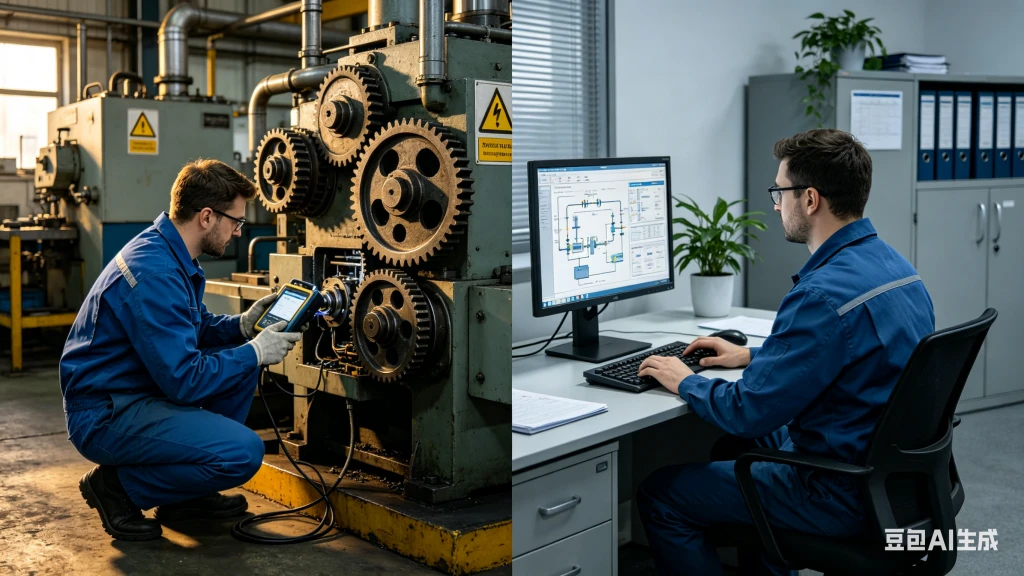
However, this convenience is accompanied by cybersecurity risks, such as ransomware attacks and unauthorized third-party access.
Is your enterprise's remote access solution secure?
We have sorted out 10 core questions to help you quickly identify potential security vulnerabilities and discover optimization space, making remote access truly a tool for O&M efficiency improvement rather than a technical debt for enterprise cybersecurity.
Do you have more than one remote access tool deployed in your OT environment?
Data shows that more than half of OT environments contain at least four remote access tools. Each additional tool requires standardized configuration, regular updates and strict access management. A slight oversight may expose critical OT systems to cyber threats.
In cybersecurity, less is more. Too many unmonitored access points expand the attack surface. Instead of pursuing quantity, it is better to focus on adopting a standardized, secure and compliant solution to cover the entire OT network.
Are you using a VPN solution designed for IT environments?
Traditional VPN solutions are widely used due to their simple and convenient deployment, but their core design is mainly for IT environments, which is fundamentally mismatched with the security requirements of industrial OT scenarios. Through VPN connections, remote users are often placed in the same network as all operational assets, with extensive access permission management and lack of fine-grained access control and temporary permission management for specific industrial assets.
Once an attacker breaks through the boundary using VPN vulnerabilities, it is extremely easy to move laterally in the network.VPN is essentially an IT-centric solution that cannot meet the complex security requirements of OT systems. For this reason, more and more organizations are transitioning to the Zero Trust model.
Have you set up persistent remote connections based on VPN?
Always-on connections save remote users the trouble of frequent re-authentication and greatly improve the user experience. However, in the absence of security control mechanisms to prevent unauthorized access, continuous connections mean a continuously exposed attack surface.
A Sophos ransomware status study shows that 70% of Remote Desktop Protocol (RDP) attacks originate from always-on or improperly configured remote access settings.In response, we recommend adopting a just-in-time access strategy, granting users time-limited and scope-limited access to systems, networks or applications only when they have actual needs.
Does your solution have anti-misoperation and risk interception capabilities for industrial scenarios?
According to statistics, more than 60% of industrial remote O&M failures are caused by human misoperations. During industrial remote O&M, even minor misoperations on industrial control systems such as PLCs, SCADAs and DCS—including parameter modification, program upload/download and command issuance—may lead to production safety accidents such as unplanned production line shutdowns and equipment damage.
To prevent such risks, enterprises need to select remote access solutions adapted to industrial scenarios, and implement protection mechanisms such as high-risk operation whitelists, core parameter modification locks, and hierarchical operation permission management to intercept misoperation risks from the source, balancing O&M efficiency and production safety.
Do your employees follow best practices for work account password security?
An undeniable reality is that even practitioners in cybersecurity-related positions may not always follow security best practices, especially in the basic but critical link of password management. 80% of IT practitioners admit that they reuse passwords or disable Multi-Factor Authentication (MFA) for convenience.
Enterprises should not only popularize secure password usage specifications to employees, but also implement control strategies such as Single Sign-On (SSO) and mandatory MFA to minimize the risks caused by human errors.
Do you have complete visibility into the operational behaviors of remote users?
To mitigate related risks, enterprises need to implement full log retention, real-time monitoring and session recording capabilities for remote access sessions. These measures can completely retain the full-link records of "who, when, which device was accessed, what operations were performed, and how long the session lasted", which is the key to post-incident traceability and accountability.
To mitigate the associated risks, organizations need to land on full log retention of remote access sessions, real-time monitoring and session recording capabilities.These measures can keep complete records of the whole chain of “who, when, which device was accessed, what operation was performed, and how long the session lasted”, which is the key to trace back and determine responsibility after the event.
Do you limit user access permissions to the minimum required for their roles?
Granting excessive permissions to employees, suppliers or contractors not only increases the risk of accidental data leakage, but also makes it easier for malicious attackers to use redundant permissions to launch attacks.
To reduce related risks, enterprises must strictly implement the Principle of Least Privilege (PoLP) to ensure that only the right people can access the right systems at the right time. At the same time, it is necessary to regularly audit user permissions and promptly clean up unnecessary and expired permission configurations.
Can you protect industrial equipment from malware infections caused by file transfers?
In industrial scenarios, remote software updates, configuration modifications and data interaction are high-frequency requirements. However, file transfers without security control will directly bring cyber threats such as viruses into the industrial network.
To prevent such risks, enterprises need to implement a file transfer mechanism with built-in multi-layer security protection.Including completing malware scanning for all incoming and outgoing files before encrypted transmission to critical systems; at the same time, retain audit logs of all file transfers to meet subsequent traceability and evidence collection requirements.
Does your remote access tool support network segmentation?
Lack of effective network segmentation and isolation means that a single compromised remote access session can lead to the fall of the entire OT network. Implementing network segmentation in the remote access system ensures that internal employees and third-party suppliers can only access specific assets required for their work tasks, thereby greatly reducing attack risks.
By implementing network segmentation and strong isolation mechanisms, enterprises can not only effectively prevent cyber attacks, but also achieve efficient response when a crisis occurs, ensuring that operational interruptions are controlled within a limited range rather than spreading to the entire infrastructure.
Have you established a normalized risk management and emergency response mechanism?
With the evolution of attack methods, the adjustment and upgrading of industrial businesses, and the update of relevant compliance policies, the remote access security system also needs to be continuously updated. However, most enterprises no longer carry out regular security assessments, policy optimization and vulnerability remediation after deploying remote access tools, leading to the gradual failure of the security line.
To build a long-term effective security line, enterprises need to establish a full-life cycle management mechanism for remote access security, and give priority to selecting remote access solution suppliers with rapid technical support and continuous optimization and iteration capabilities.
Closing Remarks
Today, remote solutions have long become a strategic choice for enterprises to maintain operational efficiency, reduce O&M risks and optimize resource allocation.
Especially for manufacturing enterprises with scattered factory areas and extensive equipment deployment, the ability to instantly access critical systems remotely is the key to ensuring production continuity and enhancing core competitiveness. While enjoying the convenience of remote O&M, enterprises also need to build a compliant, reliable and long-term effective remote access security system.
Facing the increasingly severe industrial cybersecurity situation, does your enterprise have the above blind spots? If you are promoting remote access projects in OT environments, or building a secure and compliant industrial remote access system for manufacturing enterprises, please feel free to contact us for a customized industrial remote communication security solution.