New Financial Policies Empower Industrial Upgrading: Remonde Assists SMEs in Intelligent Manufacturing Transformation
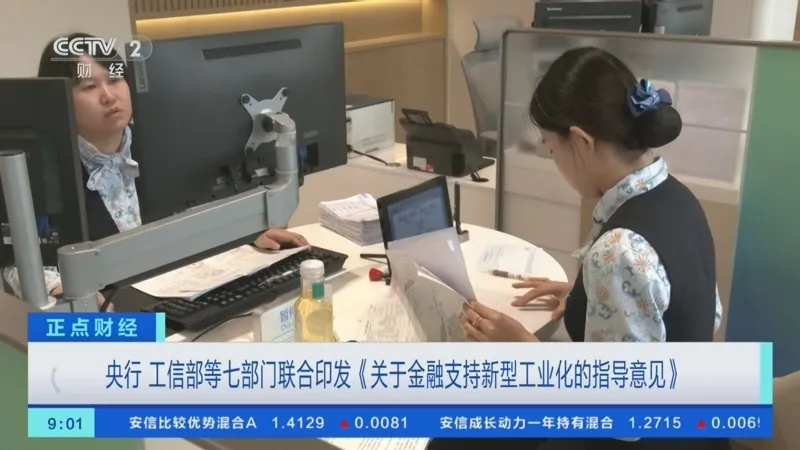
Recently, seven departments including the People's Bank of China, the Ministry of Industry and Information Technology, the National Development and Reform Commission, the Ministry of Finance, the National Administration of Financial Regulation, the China Securities Regulatory Commission, and the State Administration of Foreign Exchange jointly issued the Guiding Opinions on Financial Support for New Industrialization (hereinafter referred to as the "Opinions"). The document puts forward targeted support measures aligned with key areas of new industrialization, marking a critical period for China's manufacturing industry to embrace digital transformation led by scientific and technological innovation.
Digital Finance Empowerment: Special Support for Small and Medium-sized Enterprises
As the main force of innovation in new industrialization, small and medium-sized manufacturing enterprises (SMEs) face multiple challenges in digital transformation, with financial pressure being the biggest obstacle. Technological transformation requires substantial investment with a long return cycle, leaving many enterprises unable to launch digital projects due to capital shortages.
The Opinions issued by the seven departments are not just a policy document but a substantive measure to promote new industrialization. The policy specifically encourages financial institutions to use technologies such as big data, blockchain, and artificial intelligence to improve the efficiency of serving the manufacturing industry, especially SMEs.
Addressing SMEs' Transformation Pain Points and Breaking Financing Bottlenecks
Against the backdrop of favorable policies, small and medium-sized manufacturing enterprises still face many practical difficulties in actual transformation, such as low equipment networking rates and inadequate energy consumption management.
As an industrial digital solution provider, Remonde deeply understands the pain points of SMEs in transformation. Targeting the key scenarios supported by the policy, we have created an integrated solution of "equipment networking + data collection + remote operation and maintenance" to help enterprises seize policy dividends and achieve digital leaps.
Data Credit Scenario: From Equipment Data to Financing Hard Currency
The Opinions first proposed the concepts of "data credit" and "asset-based credit", meaning that equipment status data can be used as a basis for financing. SMEs generally face problems such as outdated equipment, insufficient networking rates, and data silos, which lead banks to refuse credit due to inability to assess production stability.
A food processing enterprise realized networking of its outdated equipment by deploying Remonde RCH gateways. It collected real-time data on temperature and humidity, fault alarms, and production beats, and generated equipment health reports through the RMC platform configuration dashboard. This transformed physical assets into tradable digital assets, which served as dynamic credit credentials recognized by financial institutions, improving financing efficiency by 60%.
Process Industry Scenario: Energy Consumption Optimization Activates Green Finance
The Opinions emphasized "strengthening the application of green credit in the low-carbon transformation of the manufacturing industry". A packaging material factory had energy consumption accounting for over 40% of its costs and lacked real-time monitoring means, which hindered its green credit application.
Remonde deployed RCH gateways for the factory to monitor and analyze energy consumption data in real time. Combined with fault alarms and work order scheduling on the RMC, it achieved second-level response to energy consumption anomalies, reducing energy consumption by 15%. With its energy conservation and emission reduction data, the enterprise successfully obtained green credit with a lower interest rate than traditional loans, saving hundreds of thousands of yuan in annual interest expenses.
Closing Remarks
As of the end of June, the balance of medium and long-term loans to China's manufacturing industry increased by 8.7% year-on-year, higher than the growth rate of all loans.
Currently, many regions are actively exploring digital finance to empower industrial digital transformation and increasing financing support for new industrialization. Whether SMEs can seize this opportunity will determine their position in future market competition.
Remonde will continue to optimize its product system, act as a technical partner and service bridge for SMEs to grasp policy opportunities, and jointly promote the process of new industrialization.