Current Status and Trends of Industrial Remote Access in 2026
A fault at an oil production wellhead thousands of miles away is diagnosed and debugged by an O&M engineer via remote access in just 15 minutes. At the headquarters of an auto parts factory, equipment at three bases across the country is remotely managed, enabling one-click synchronization of production line O&M. These are not future scenarios, but the daily reality of global manufacturing today.
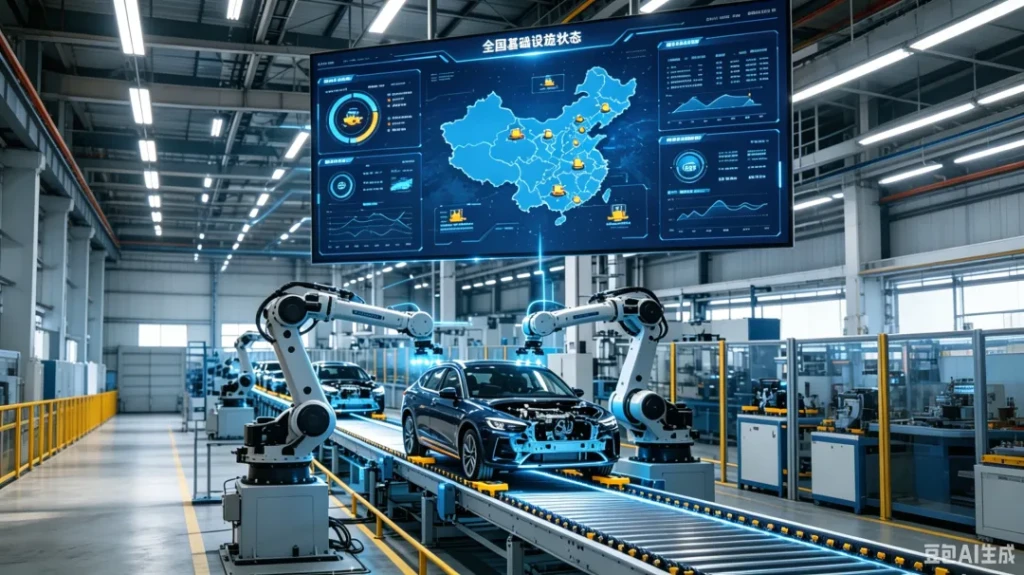
With the deepening of Industry 4.0, the upgrading of intelligent manufacturing and the cross-regional layout of enterprises, industrial remote access solutions have evolved from temporary technologies to key means for enterprises to ensure business continuity, reduce costs and increase efficiency, and enhance core competitiveness in equipment maintenance, troubleshooting, supplier support and data recovery.
This article will discuss the current status, core pain points and three-year trends of industrial remote access in 2026. In the future, we will delve into technical details, industry cases and security solutions to empower enterprise development with remote solutions from "cognition" to "implementation".
Current Status of Industrial Remote Access in 2026
According to research data from YH Research, the global market size of industrial secure remote access solutions was approximately 2.51 billion RMB in 2024, and is expected to approach 3.70 billion RMB by 2031, with a Compound Annual Growth Rate (CAGR) of 4.9% over the next six years. The industry presents the characteristics of "accelerated popularization, obvious stratification and prominent pain points".
01 / Application Scenarios: Penetrating from Basic O&M to Full Scenarios
In 2026, industrial remote access is no longer limited to traditional remote equipment debugging and troubleshooting, but has fully penetrated the entire industrial production process, forming diversified application scenarios:
Intelligent manufacturing scenario:An auto parts enterprise realized unified management of multiple bases and production lines through cross-regional networking, reducing O&M response time from 3 days to 15 minutes.
Energy and chemical scenario:In unattended scenarios such as oil fields and mines, real-time monitoring and parameter adjustment through industrial remote gateways save 180,000 RMB in annual O&M costs.
Cross-border O&M scenario:A textile machinery enterprise achieved secure connection of overseas equipment through a remote access solution, eliminating the need for on-site technical support.
Emerging technology scenario:Frontline personnel receive remote expert annotation guidance through AR glasses, and AI quickly locates faults and pushes solution.
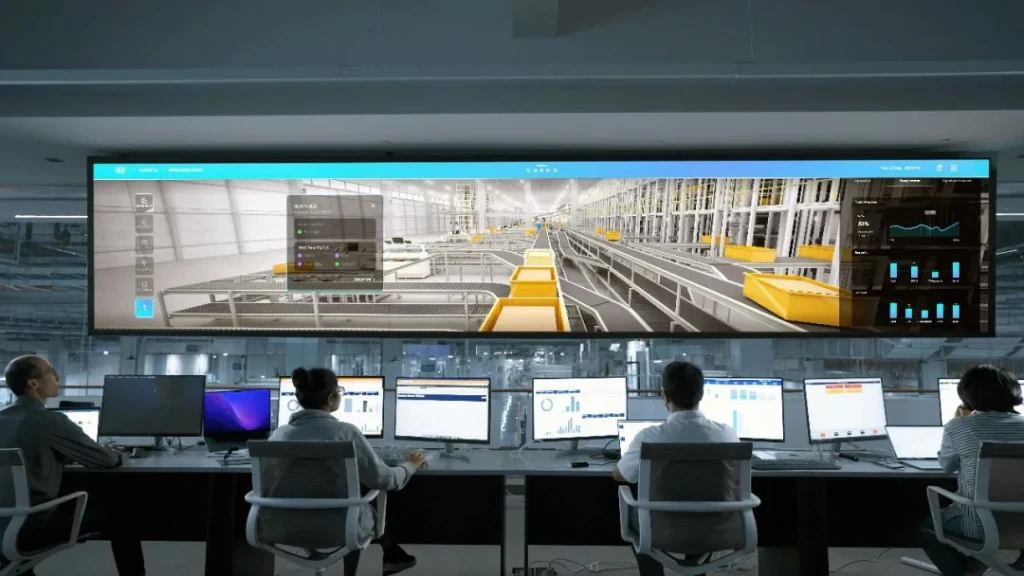
02 / Technical Status: Integration Has Become the Norm, but Shortcomings Remain
Current industrial remote access technology has formed a complete system of "hardware + software + cloud platform", with core technologies showing a trend of integrated development, but there are still obvious shortcomings:
First, poor equipment compatibilityInconsistent protocols for devices of different brands and ages lead to high networking costs;High security risks:Some enterprises still use traditional VPNs, which have "full access" vulnerabilities;Difficult implementation for SMEs:Lack of low-cost and lightweight solutions.
03 / Market Pattern: Head Concentration, Low Penetration Rate Among SMEs
Leading enterprises occupy the main market with technological and case advantages.Domestic enterprises focus on local industry needs, launch solutions adapted to domestic equipment and supporting private deployment, and gradually rise in fields such as intelligent manufacturing and energy.
Head enterprises occupy the main market by virtue of technical and case advantages; domestic enterprises focus on the needs of local industries, launch solutions adapted to domestic equipment and support for private deployment, and gradually rise in intelligent manufacturing, energy and other fields.
However, overall, the penetration rate among SMEs is still low. Most SMEs are restricted by funds and technology, adopting traditional O&M or simple solutions, and cannot fully leverage the cost reduction and efficiency improvement value of remote access, which is also the core growth potential of the industry in the future.
Four Major Trends of Industrial Remote Access in 2026
Combined with the industry status and technological development, industrial remote access is expected to usher in four core trends in 2026, gradually upgrading from "being able to access" to "efficient, secure, convenient and low-cost", and will also spawn more new application scenarios and business models.
Trend 1: Industrial Chain Collaboration, "Hardware + Software + Service" Closed Loop
In the future, industrial remote access will no longer be a single technology or device, but will form an ecological closed loop of "hardware devices (routers, gateways) + software platforms (remote control, security protection) + value-added services (O&M support, customized development)". It will provide enterprises with "one-stop" solutions, offering full-process support from solution design, deployment and implementation to post-operation and maintenance.
Trend 2: Zero Trust Becomes Standard, Balancing Security and Convenience
With the deepening integration of OT and IT networks, traditional VPNs will be gradually phased out, and Zero Trust Network Access (ZTNA) will become the industry standard. Future Zero Trust solutions will be more tailored to industrial scenarios, realizing full-process security protection of "identity authentication + permission control + behavior audit", and will be gradually popularized in all industrial fields.
Trend 3: Lightweight and Standardization, Facilitating Implementation for SMEs
Aiming at the pain points of "high cost and difficult operation" for SMEs, future solutions will develop towards lightweight, standardized and low-cost directions.
On the one hand, manufacturers will launch lightweight and standardized solutions to lower deployment thresholds and adapt to the equipment status of SMEs. On the other hand, the popularization of leasing, SaaS and other models will allow SMEs to enjoy professional remote access services without a large one-time investment, further reducing implementation costs.
Deep Integration of AI + AR, Upgrading Intelligent Remote O&M
In the next 3-5 years, the deep integration of AI and AR will become a core breakthrough point, realizing the leap from "passive guidance" to "active intelligent assistance".
AI will automatically identify equipment models and fault points through image recognition and knowledge graphs, and match fault solutions in real time. AR will visualize the solutions, allowing frontline personnel to complete equipment maintenance according to AR-annotated steps without professional knowledge.
Closing Remarks
In the wave of industrial digital transformation, remote access, data collection and AI intelligent analysis have been gradually applied in-depth across the entire industry.
The complete implementation of industrial remote access solutions is not as simple as "buying equipment and connecting to the network". It also requires considering deployment costs, security compliance, and the integration of technology and business to choose the most suitable remote solution for you.