Remote access for suppliers: Too many tools and chaotic permissions? Try this approach.
Supervisor Wang has been frustrated lately.
When a production line PLC breaks down unexpectedly, the equipment supplier’s O&M engineer requests remote access for troubleshooting. But this supplier uses a niche remote tool, forcing the IT team to temporarily open firewall ports yet again — this is already the 5th different remote tool used this month.
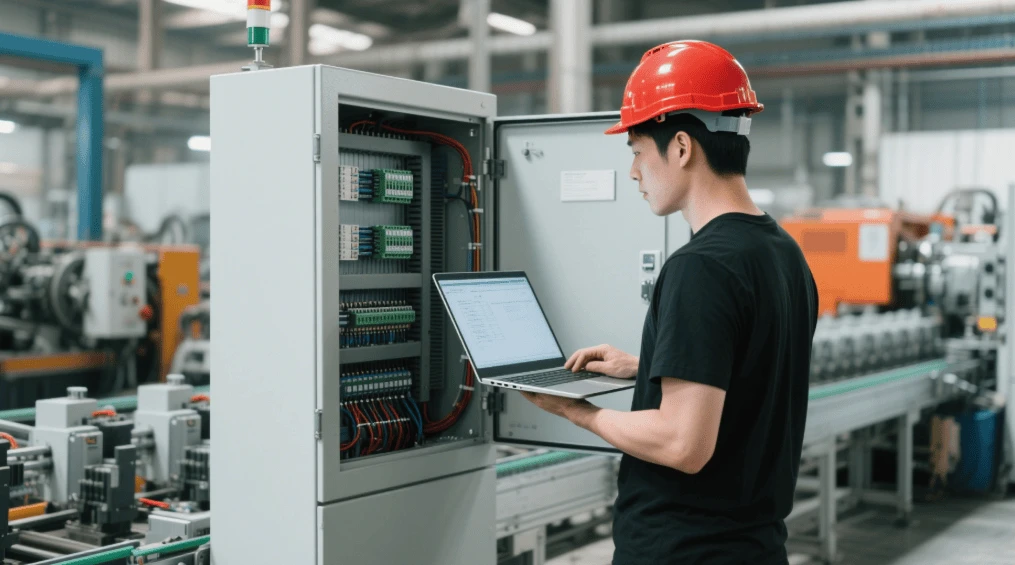
In 2026, the digital transformation of manufacturing has entered a deep phase, and remote O&M has become ubiquitous. When equipment fails, suppliers can diagnose issues remotely; when software glitches occur, service providers can resolve them via remote adjustment.
According to the latest research, over 60% of factories are running remote O&M tools from more than 10 different suppliers simultaneously. Some come standard with equipment, some are mandated by software service providers, and others are ad-hoc emergency solutions.
Over time, the growing number of disorganized remote tools in factory networks creates ungovernable security blind spots.
It’s Not Just Too Many Tools — It’s Hidden Risks
Many factory managers initially dismiss it as just installing a few extra pieces of software, assuming anything that works is fine. But in practice, it brings a cascade of problems.
Chaotic Permissions: Overly Broad Access, Forgotten Revocation
The most pressing headache is permission management. Every time a supplier performs remote maintenance, IT has to grant network access and system accounts.
Sometimes, when a supplier needs to repair a single machine tool, IT, to save trouble, grants access to the entire network segment. Other times, temporary accounts are left undeleted, and it is only discovered long after cooperation ends that a former supplier still has access to the factory’s production network.
This is far from proper after-sales support — it is essentially leaving a string of open backdoors.
Lack of Audit: Difficult Traceability and Accountability After Incidents
Some tools come with built-in permissions. Once installed, they gain default access to the entire LAN, with no visibility into what actions they perform.
Logs from different remote tools are scattered across systems, and some tools have no logging capability at all. When an incident occurs, your team has to troubleshoot across a dozen systems. By the time the root cause is identified, losses have already materialized.
Even after days of investigation, it is often impossible to verify when an account connected, what operations it performed, or which files it accessed, making accountability nearly impossible.
Rising Costs: Half the Workday Spent Managing Tools
Tool fragmentation also translates to tangible cost waste.
With different suppliers using different remote tools, the IT team must manage and maintain over a dozen separate systems. Each requires patching and configuration. Simply switching between consoles and logging into accounts consumes half the workday, directly wasting human resources and driving up management costs.
How to Solve These Problems?
Unify All Suppliers on a Single Management Platform
The solution is straightforward: since the problem stems from too many disparate tools, consolidate all supplier remote access into one unified platform.
Factories can manage and assign accounts through a single platform. Every supplier — whether debugging equipment or software — connects remotely via this platform. Instead of juggling over a dozen tools, teams can manage all permissions, audits and security through one system.
Granular Access Control for Effective Remote Access Governance
First is fine-grained permission management.
Previously, granting supplier access was an all-or-nothing proposition. Now, you can precisely restrict a specific supplier account to only access one designated device, with no access to anything else. All permissions can also be adjusted at any time as needed.
Second is a full-chain audit mechanism.
Next is the end-to-end audit mechanism.
All remote access sessions are logged and screen-recorded end-to-end. For every supplier, you can trace when they connected, what devices they accessed, and what operations they performed via logs and session playback. When issues arise, there is no more sifting through logs across a dozen tools.
Lightweight Deployment Without Disrupting Production
Many teams worry: unified management sounds ideal, but will deployment be complex and delay production schedules? The answer is no.
Modern platforms generally support lightweight deployment options. They require no changes to the existing production network structure, do not affect equipment warranties, and need no modifications to device configurations. A secure, reliable remote access environment can be set up quickly, driving standardization, proceduralization and normalization of enterprise O&M management.
Achieving Both Security and Efficiency
One steel plant previously allowed suppliers to use their own remote tools, which offered no security guarantees and came with high costs. After switching to a unified platform, not only were security risks resolved, but management costs dropped by 50% and efficiency improved significantly.
This is the value of unified governance: you do not have to sacrifice security and compliance for after-sales efficiency, nor do you have to disable supplier remote support for the sake of security.
It lets you resolve remote O&M issues quickly while keeping all permissions and risk response measures firmly under your control.
Closing Remarks
In 2026, the manufacturing industry has long moved past the era of closed-door development. Supply chain collaboration and remote O&M have become an inevitable trend of digital transformation.
But we must not bury ourselves under hidden risks for the sake of efficiency. Unify all supplier remote access on one platform, tighten permission management, implement audit mechanisms, and elevate security standards.
Trading higher O&M efficiency for controllable risks is the right path that manufacturing remote O&M management should follow.